Top Skills You Need in 2026 (And Why Most Students Are Learning the Wrong Ones)
(Welcome from Instagram! If you watched our recent video on the skills gap, this guide breaks down the exact 6-step framework and a 12-month roadmap to actually build them.)
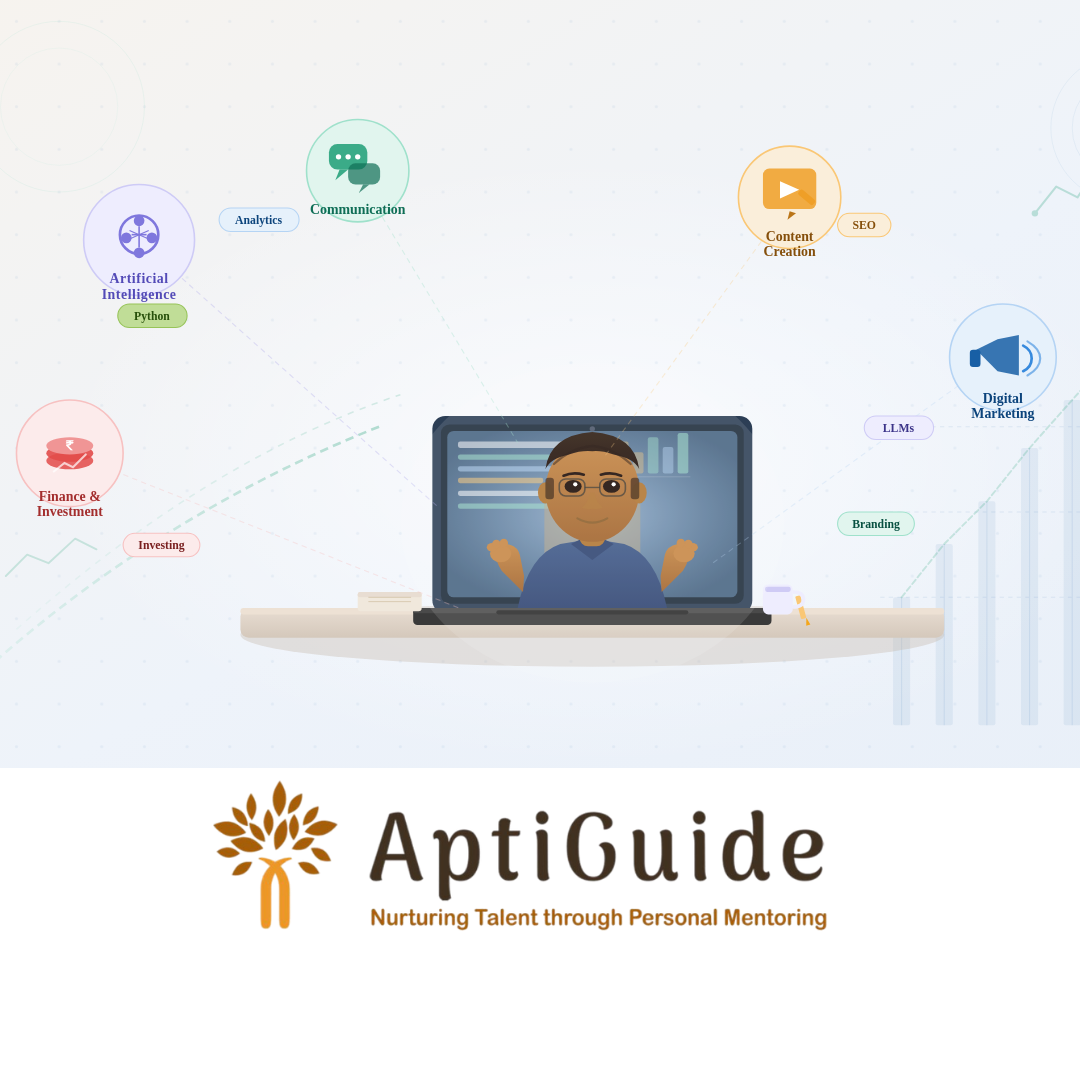
Introduction: The Skill Gap Nobody Talks About
Over the last few years, one pattern has become very clear:
Students are spending time learning things that feel productive, but don’t translate into real-world outcomes.
At the same time, the job market is shifting faster than ever:
- AI is automating repetitive tasks
- Companies are valuing execution + thinking, not just degrees
- Attention has become a core economic resource
This creates a gap:
People are busy, but not valuable.
At AptiGuide, through continuous student interactions, career counselling sessions, and industry observation, one insight stands out:
The students who succeed are not the ones who “know more” — but the ones who can apply, communicate, and distribute what they know.
This blog breaks down the most relevant skill clusters for 2026 and beyond, based on how real-world systems are evolving — not based on trends or hype.
High-Value Skills That Will Actually Pay in 2026
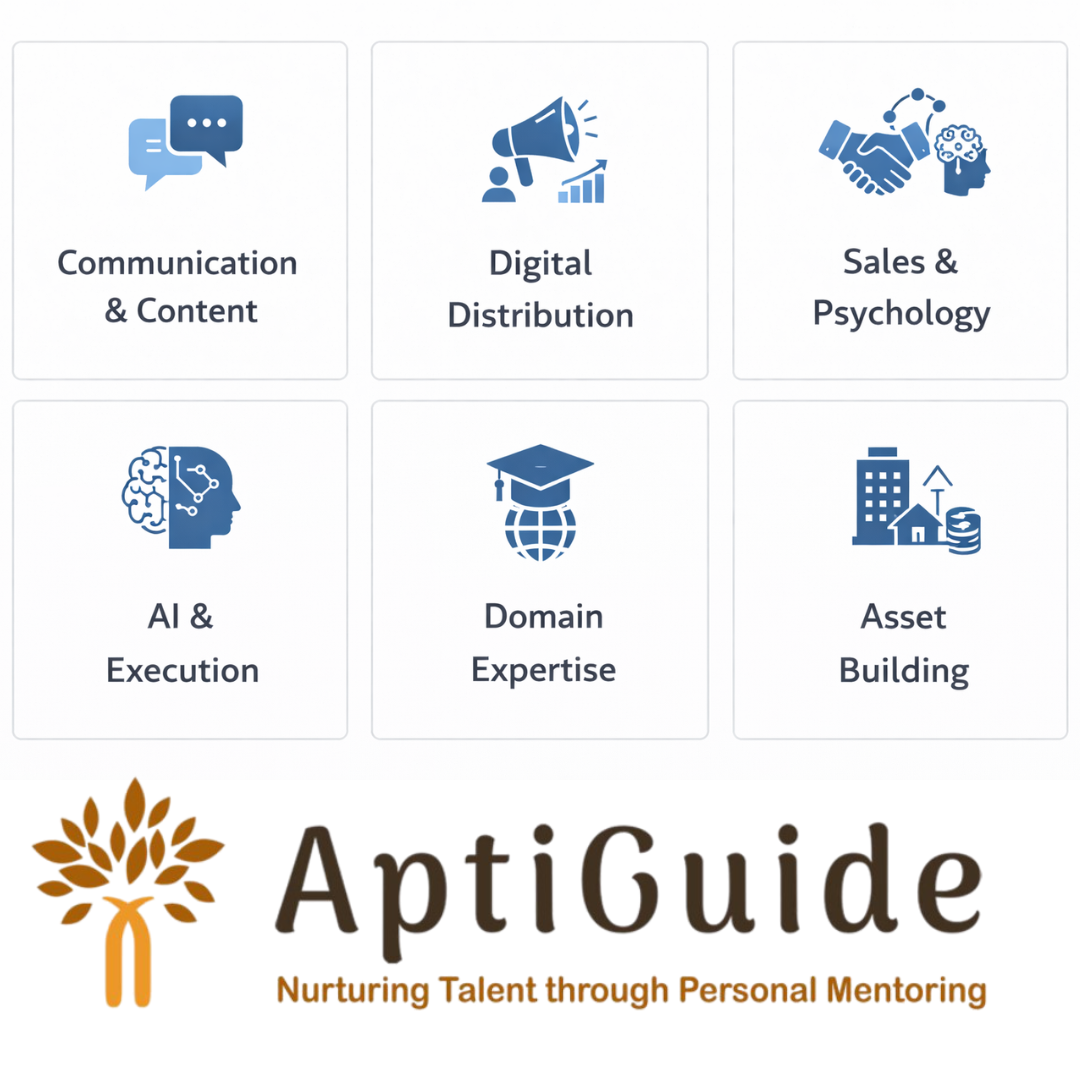
These are not “trending skills”.
These are foundational leverage skills that compound over time.
- Communication & Content Skills (The Trust Layer)
Why this matters
In today’s digital world, clarity of thought = competitive advantage.
Whether you are:
- A student
- A professional
- A business owner
Your ability to explain ideas clearly determines:
- Opportunities you attract
- People who trust you
- Income you generate
Skills to focus on
- Short-form video storytelling (Instagram Reels, YouTube Shorts)
- Writing with structure and clarity
- Explaining complex ideas in simple language
- Public speaking (offline + online)
Real-world impact
Students who develop communication skills early:
- Build personal brands faster
- Stand out in college applications and interviews
- Transition easily into roles like consulting, teaching, content, or leadership
- Digital Distribution Skills (The Visibility Layer)
Why this matters
Creating value is not enough.
If people cannot find you, your work has zero economic impact.
Today:
Distribution is more powerful than creation.
Skills to focus on
- Understanding how Instagram & YouTube algorithms work
- SEO (Search Engine Optimization for Google visibility)
- Content consistency and format strategy
- Basics of paid marketing (ads, funnels)
Reality check
Two people can have the same knowledge.
The one who understands distribution:
- Gets clients
- Builds audience
- Creates income
The other remains invisible.
- Sales & Psychology (The Conversion Layer)
Why this matters
Most students misunderstand this:
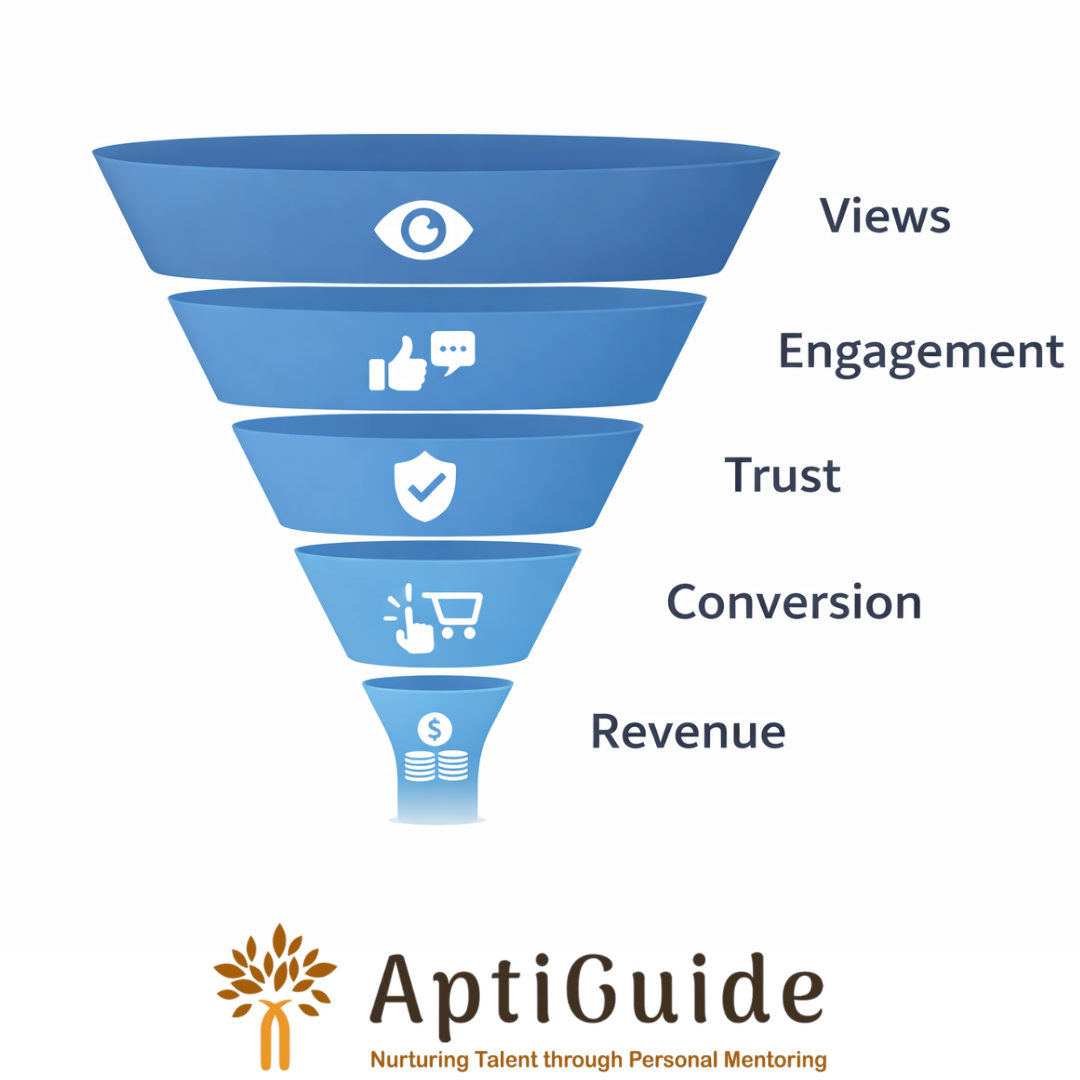
Income is not generated by effort.
It is generated by conversion.
Skills to focus on
- Consumer psychology (why people buy)
- Copywriting (ads, landing pages, emails)
- Negotiation and persuasion
- Understanding decision-making behavior
Key insight
Ethical selling is not manipulation — it is clarity + value alignment.
Students who learn this skill:
- Perform better in interviews
- Build businesses faster
- Earn significantly higher over time
- AI + Execution Skills (The Leverage Layer)
Why this matters
AI is not eliminating jobs.
It is eliminating low-value execution.
At the same time, it is amplifying:
- Smart thinkers
- Fast executors
- System builders
Skills to focus on
- Using AI tools like ChatGPT effectively (prompting, structuring output)
- Automating workflows (content, research, data)
- Combining human thinking with AI efficiency
Critical distinction
- AI without thinking → average output
- AI with structured thinking → exponential advantage
- Domain Expertise (The Differentiation Layer)
Why this matters
Generic knowledge is no longer valuable.
Depth is.
You need at least one area of real understanding.
High-relevance domains
- Finance (markets, investing, macro trends) (this can be internally linked to IPMAT page)
- Technology (AI, data, systems)
- Law & policy
- Health & wellness
- Education & learning systems
Example
Weak positioning:
“Motivation content creator”
Strong positioning:
“Explaining how interest rates affect student loans and careers”
- Asset Building Skills (The Wealth Layer)
Why this matters
There is a difference between:
- Earning money
- Building wealth
Freelancing = income
Assets = long-term leverage
Assets you should aim to build
- A personal brand (trusted identity)
- A niche audience (focused community)
- A product/service (scalable value)
Long-term reality
People who own assets control their income.
People who don’t, depend on it.
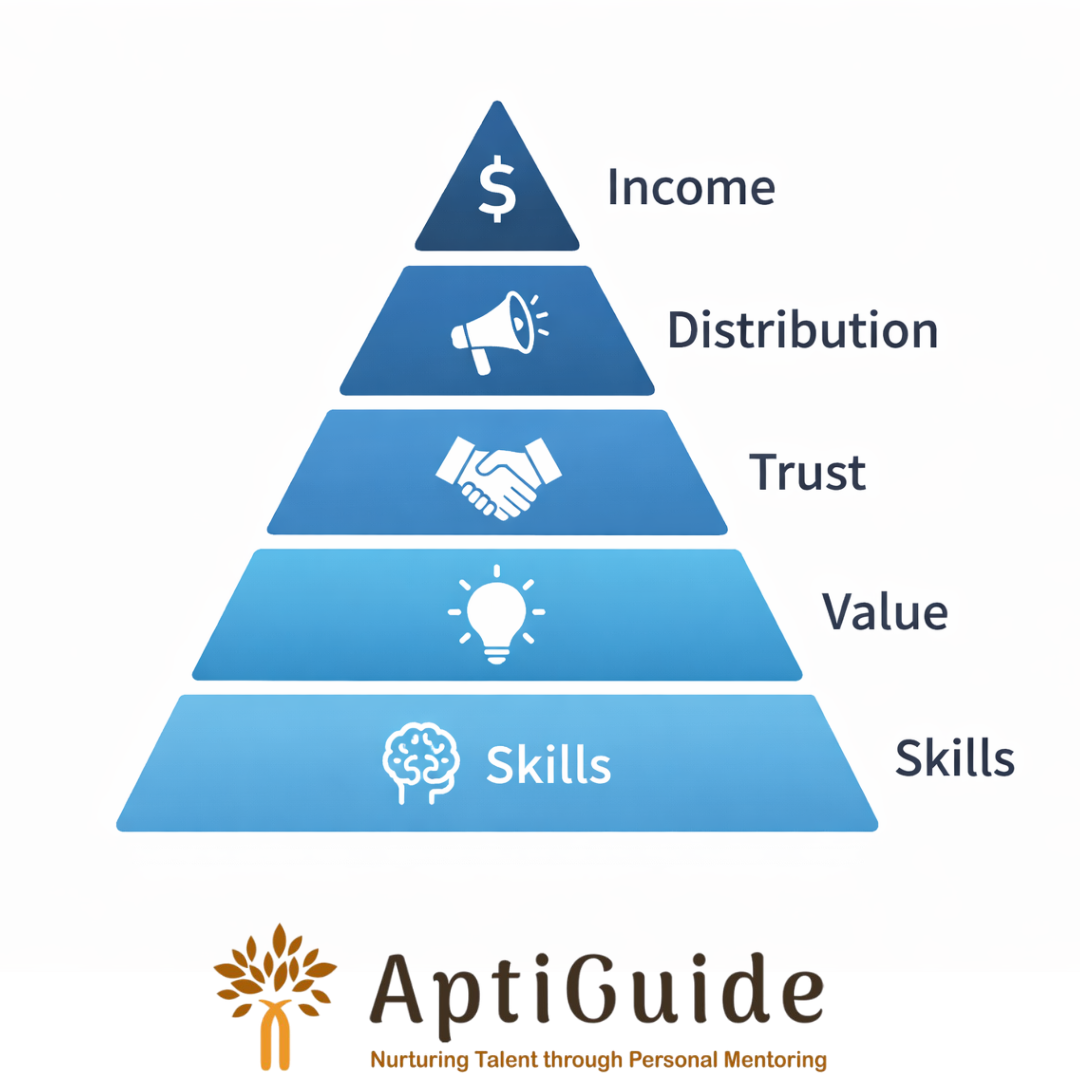
The Real Framework: How Money Is Actually Made Online
Ignore shortcuts.
The real system is predictable:
- Build Skill
- Create Value
- Earn Trust
- Distribute Content
- Monetize Ethically
This process is:
- Slow initially
- Exponential later
What Students Should Do Today (Practical Roadmap)
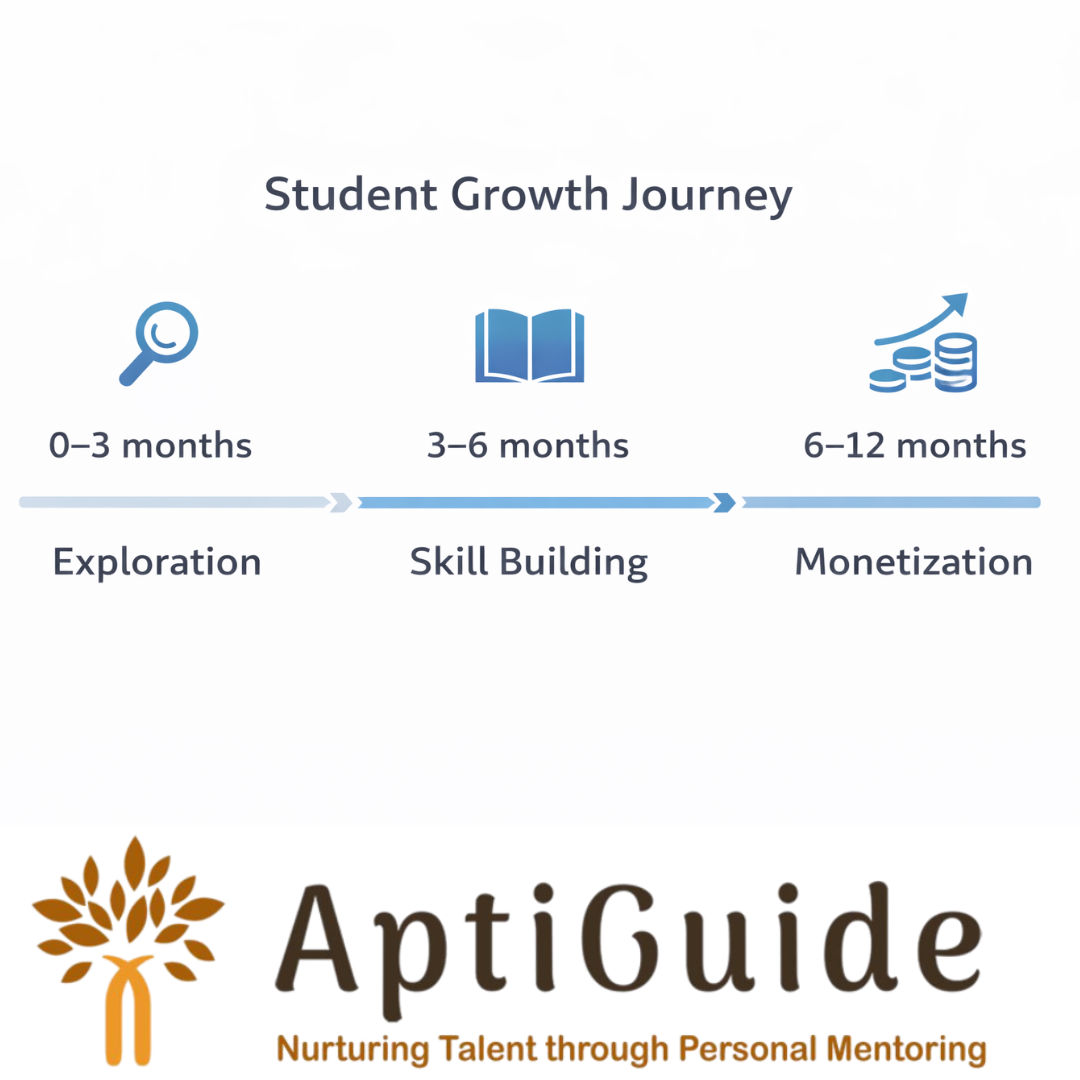
Phase 1: Exploration (0–3 months)
- Choose one domain (finance, tech, geopolitics, etc.)
- Start creating 1–2 content pieces per week
- Learn basic video editing and storytelling
- Observe what gets attention and why
Phase 2: Skill Building (3–6 months)
- Improve clarity in communication
- Develop consistency
- Start understanding audience psychology
- Learn basic SEO and content structuring
Phase 3: Monetization (6–12 months)
- Explore internships or freelance work
- Build small offers (guidance, content, services)
- Strengthen your niche positioning
The Reality Check Most People Ignore
The internet has created:
- More opportunities
- But also more noise
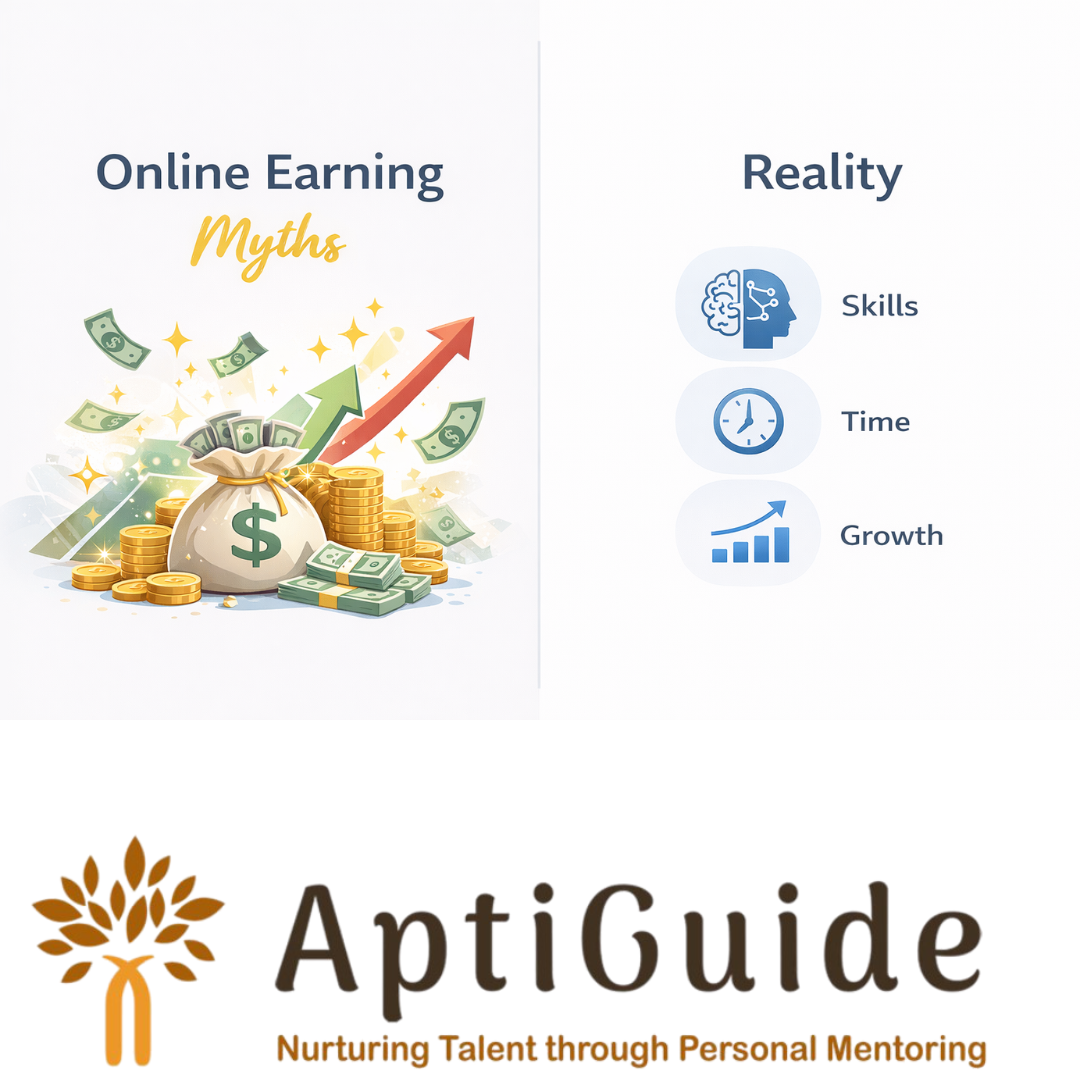
So the next time you hear:
“Earn $1000 per day with this method”
Pause and ask:
- What value is being created?
- Where is the trust?
- Who is actually making the money?
In many cases:
The person selling the method is the one earning from it.
✅ Conclusion: What Actually Works
There is nothing wrong with wanting financial independence early.
But the path is not:
- Quick
- Easy
- Or algorithm-driven
It is:
- Skill-based
- Trust-driven
- Built over time
Final Principle
Shortcuts create content. Skills create income.
You cannot build these skills if you are confused about your core career path. Whether you want to enter Finance, Tech, or Business, it starts with a structured roadmap.
Recent Blog
Subcribe Our Newsletter
We specialize in entrance exam coaching and study abroad consultancy. Our expert guidance ensures you excel in exams like CAT, SAT, GMAT, GRE, CUET, IELTS, Bank PO, and more.
Courses Category
Address & Contact
2nd Floor, Crystal Plaza, SCO-2, Market, near P.I.M.S Hospital, above ICICI Bank, Choti Baradari Part 1, Choti Baradari, Jalandhar, Punjab 144001
Call Us : 91 70097 33841
We are open from Monday to Saturday
10:00 AM - 07:00 PM
Copyright 2026 © All Right Reserved by AptiGuide