IPMAT 2025 Paper Analysis – Indore & Rohtak Difficulty, Cutoffs & Strategy Blueprint for 2026/2027 Aspirants
IPMAT 2025 did not radically change the exam structure.
It changed the discipline required to crack it.
Indore became tighter and more application-heavy.
Rohtak became deceptively easy — and therefore more dangerous.
This analysis goes beyond “easy/moderate/hard” labels. It explains:
- Section-wise difficulty (numeric + descriptive)
- What actually appeared in the paper
- Cutoff implications (including the 381 spike)
- What students got wrong
- Ideal attempt ranges
- Strategic lessons for IPMAT 2026 aspirants
This is built from structured paper evaluation, classroom discussions, and student feedback.
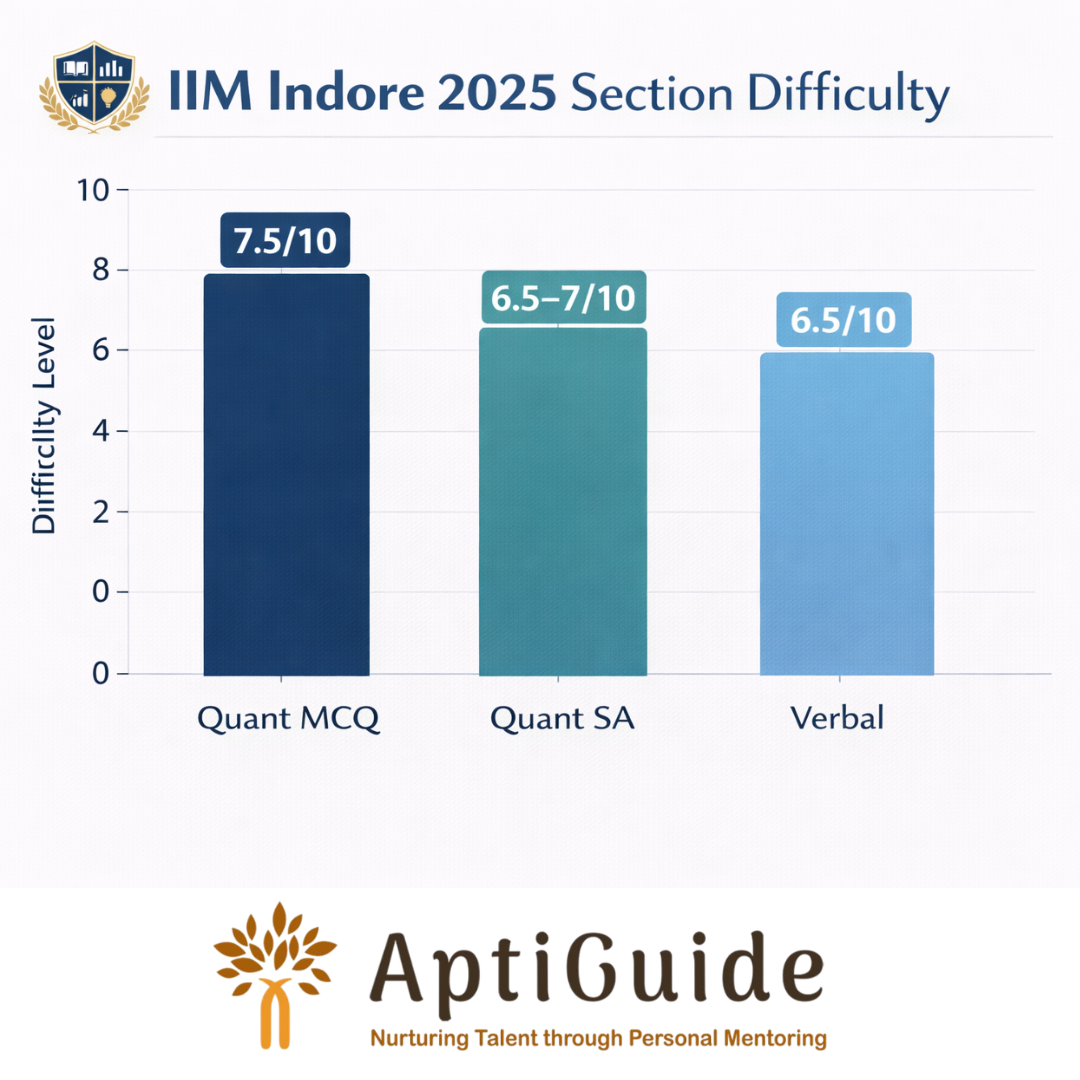
IIM Indore 2025 – Section-Wise Difficulty Snapshot
Section | Difficulty (Out of 10) | Description |
Quant MCQ | 7.5/10 | Moderate to Hard (Application-heavy) |
Quant Short Answer | 6.5–7/10 | Moderate to Hard (Precision-based) |
Verbal Ability | 6.5/10 | Moderate but Lengthier |
Overall Indore Difficulty: ~7/10 (Slightly tougher than 2024)
Quant MCQ – Tougher, But Not Calculus-Dominated
Quant MCQs were clearly tougher than the previous two editions.
But not because of heavy calculus.
The paper drew from:
- Arithmetic
- Algebra
- Modern Math
- Conceptual reasoning
There were no unusually hard calculus-dominant questions.
This once again busts the common myth that IPMAT Indore is a “calculus-heavy” exam.
Students who spent disproportionate time revising complex calculus at the cost of arithmetic precision were at a strategic disadvantage.
The tougher questions were multi-step and application-driven — not formula-based.
Mentor Insight:
Indore 2025 rewarded conceptual clarity over shortcut obsession.
Quant Short Answer – Similar to 2024, Precision-Centric
Short Answer difficulty remained close to 2024 levels.
What changed was the margin for error.
Approximation did not work.
Students who aggressively attempted too many SA questions without full certainty lost crucial marks.
Selective, high-confidence attempts were still the optimal strategy.
Verbal Ability – Lengthier & Stamina-Testing
The Verbal section was not brutally complex — it was longer.
Indore introduced three lengthy RC passages, covering themes such as:
- Social Media
- Economics
- Business
These themes required analytical reading rather than vocabulary-based interpretation.
Students who relied on passive reading struggled.
Students who applied structured elimination techniques (like RAMA Framework™ – internal link) handled the section more efficiently.
Cognitive fatigue became a bigger factor than conceptual difficulty.
IIM Rohtak 2025 – Section-Wise Difficulty Snapshot
Section | Difficulty (Out of 10) | Description |
Quant | 4/10 | Easy to Moderate |
Logical Reasoning | 2/10 | Very Easy |
Verbal Ability | 5/10 | Moderate |
Overall Rohtak Difficulty: ~4.5/10 (Easier than recent years)
But here is the real story.
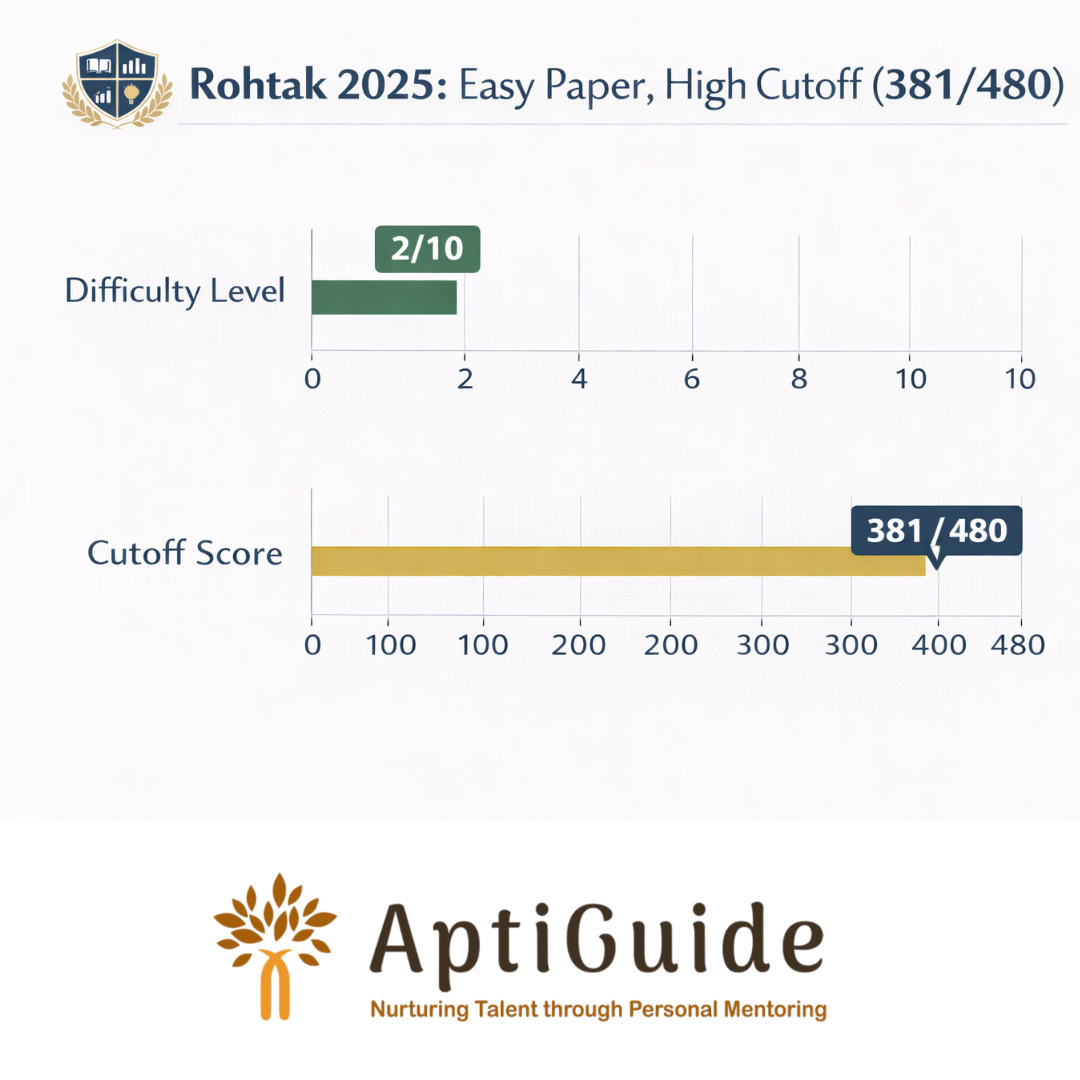
Because the paper was easy, the cutoff skyrocketed.
The General Category cutoff reached 381 out of 480.
Why Rohtak 2025 Was More Dangerous Than It Looked
When a paper becomes easier:
- Speed becomes decisive.
- Small errors become fatal.
- There is almost no margin for error.
Rohtak 2025 proved that an easy paper is actually more dangerous.
With a cutoff of 381, even 3–4 careless mistakes could shift rank significantly.
Speed without accuracy was lethal.
Balanced aggression was required.
Indore vs Rohtak 2025 – Structural Differences
Factor | Indore 2025 | Rohtak 2025 |
Quant Difficulty | Tougher | Easier |
Verbal | Lengthier | Moderate |
Logical | Not included | Very Easy |
Cutoff Pressure | Balanced | Extremely High |
Risk Type | Overthinking | Time mismanagement |
Indore rewarded disciplined selection.
Rohtak punished hesitation.
Ideal Attempt Ranges – What Likely Worked in 2025
Based on paper difficulty and cutoff behavior:
For Indore:
- Quant MCQ: ~20–25 high-confidence attempts
- Quant SA: ~6–8 precise attempts
- Verbal: 85–90% attempt with elimination discipline
Over-attempting SA reduced net score.
Selective aggression improved results.
For Rohtak:
- Total attempts: ~95–105 out of 120
- High accuracy mandatory
- Logical section should have been completed quickly
Rohtak demanded volume + accuracy.
What Students Got Wrong in 2025
Across discussions and mock parallels:
- Many overestimated calculus importance.
- Some ignored arithmetic fundamentals.
- Over-attempted SA in Indore.
- Lost stamina in long Verbal passages.
- Underestimated Rohtak cutoff escalation.
- Over-invested time in easy LR sets.
IPMAT punished poor distribution more than weak concepts.
What 2026 Aspirants Must Learn
For Indore:
- Build arithmetic + algebra strength.
- Practice application-based Quant.
- Train for longer RC stamina.
- Drill SA precision weekly.
For Rohtak:
- Speed simulation practice.
- 100-attempt mock drills.
- Accuracy-first elimination discipline.
For All:
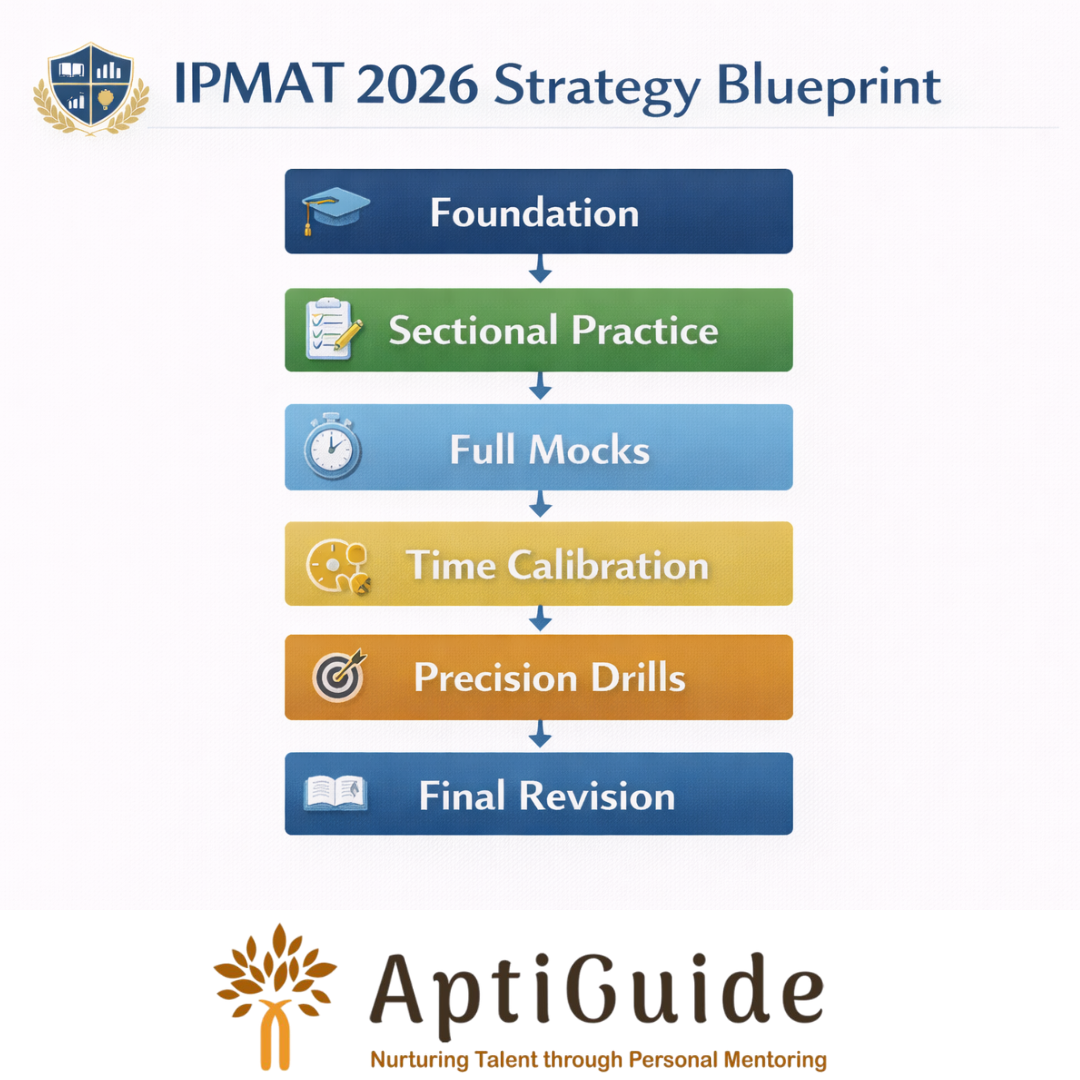
- Minimum 25–30 full-length mocks.
- Deep post-mock analysis.
- Section switching practice.
Want Structured Preparation Based on 2025 Trends?
If you are preparing for IPMAT 2026:
- Our Quant calibration reflects tougher MCQ levels.
- SA precision drills are aligned to 2025 pattern.
- Verbal stamina sessions are built around longer RC formats.
- Rohtak speed simulations replicate high-cutoff pressure.
👉 Explore IPMAT Coaching in Jalandhar
Final Strategic Takeaway
IPMAT 2025 was not about extreme difficulty.
It was about disciplined execution.
Indore tested depth.
Rohtak tested speed.
Both punished emotional preparation.
IPMAT rewards structure — not panic.
IPMAT Resources
IPMAT Syllabus
How to Prepare For IPMAT
RAMA Framework™ – Verbal Strategy.
IPMAT Interview Preparation
IPMAT Past Year Paper Analysis
IPMAT Important Dates
Have Questions? Contact Aptiguide Admissions Now!
Quick Answers
Frequently Asked Questions
Was IPMAT 2025 harder than 2024?
Indore was slightly tougher, primarily in Quant MCQs and Verbal length.
Did calculus dominate the paper?
No. Arithmetic, algebra, and modern math were equally significant.
Why was Rohtak cutoff so high?
Because the paper was easier, competition tightened and accuracy became decisive.
Which section was toughest in Indore?
Quant MCQ.
How should 2026 aspirants prepare differently?
Focus on fundamentals, selective SA attempts, and speed calibration for Rohtak.